Sir Simon's failed attempts to haunt the Otis family
The Canterville GhostSir Simon de Canterville’s failed attempts to haunt the Otis family transform Canterville Chase’s long-standing supernatural menace into a comic contest over who can control the house. Sir Simon arrives with centuries of reputation, elaborate disguises, and strict ideas about his duties as a ghost; the Otises answer with commercial remedies, modern weapons, and practical jokes. Each defeat diminishes his power to command fear, while the recurring bloodstain and the discovery of his chained skeleton show that the comedy rests on a still-unresolved history of violence.
Background and Stakes
The contest begins when Hiram B. Otis buys Canterville Chase despite warnings that the house is haunted. Lord Canterville explains that the ghost has been known for three centuries, appearing before the death of a family member, and recounts earlier disturbances: his grandaunt was frightened into a lasting fit by two skeletal hands, younger servants refused to stay, and Lady Canterville lost sleep over noises in the corridor and library. Otis rejects the idea that nature’s laws would be suspended for British aristocracy, treating the haunting as no reason to abandon the purchase.
The family’s first encounter with the house’s history is the Canterville bloodstain in the library. Mrs. Umney identifies it as the blood of Lady Eleanore de Canterville, murdered there by her husband, Sir Simon, in 1575; she says Sir Simon survived her by nine years, disappeared mysteriously, and was never found. When Washington Otis removes the stain with Pinkerton’s Champion Stain Remover and Paragon Detergent, a flash of lightning and thunder startle the household, and Mrs. Umney faints. The stain’s repeated return, despite later efforts to erase it, keeps the past materially present even as the family makes light of it.
The First Confrontations
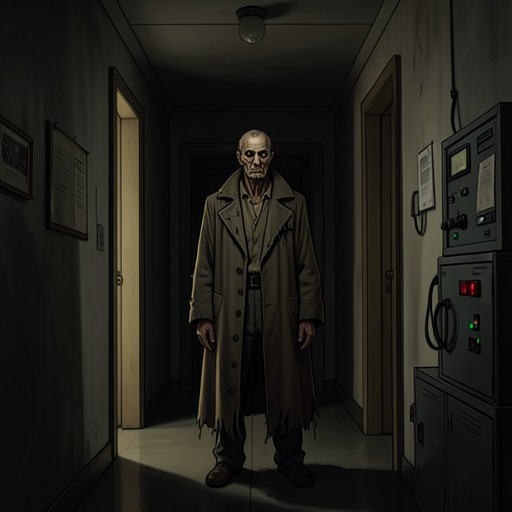
On the first night Sir Simon approaches Mr. Otis’s room in the corridor, his chains making a metallic noise. Otis responds not with fear but with a bottle of Tammany Rising Sun Lubricator, offering it as a remedy for the noise and leaving it on a marble table. Sir Simon throws the bottle down and flees. At the staircase, two figures in white appear and a pillow flies past his head: the Otis twins have already made the ghost an object of practical resistance.
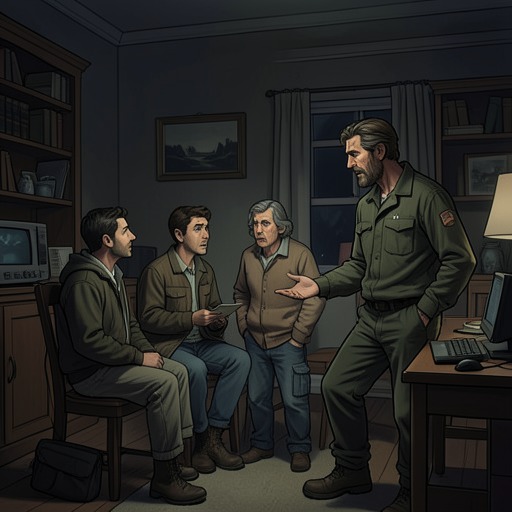
The next major attempt begins with an accident rather than an intended performance. A suit of armour falls in the hall, and the family finds Sir Simon seated in a chair, rubbing his knees. The twins fire pellets from their pea-shooters; Mr. Otis covers him with a revolver and orders him to raise his hands. Sir Simon sweeps through the group like mist, putting out Washington’s candle, then tries to recover his authority with his celebrated demoniac laugh. Mrs. Otis meets that sound with a bottle of Doctor Dobell’s tincture, supposing he may have indigestion. As the twins approach, Sir Simon abandons his attempt to turn into a large black dog and vanishes with a churchyard groan.
Back in his room, the ghost is profoundly agitated. He resents what he regards as the twins’ vulgarity and Mrs. Otis’s materialism, but is especially distressed that his own suit of armour has defeated him: the heavy breastplate and steel helmet made him fall before he could use the costume to impress the family. The armour had once brought him praise at the Kenilworth tournament, including from the Virgin Queen. His recollection makes the failure more than a failed scare; an old emblem of status and theatrical power now weighs him down.
Escalating Tricks and Retreat
After recovering, Sir Simon tries to preserve his customary supernatural schedule while avoiding detection. Though he gives up trying to maintain the bloodstain, he considers his appearances in the corridor and at the oriel window a solemn obligation. For three Saturdays he moves without boots, in a black velvet cloak, and oils his chains with the Rising Sun Lubricator. He has first taken the bottle from Mr. Otis’s bedroom, reluctantly accepting that the modern product serves his purpose. The adaptation does not end the conflict: the twins stretch strings across the corridor, and a butter-slide from the Tapestry Chamber to the oak staircase brings him down while he is dressed as Black Isaac, the Huntsman of Hogley Woods.
Angered, Sir Simon spends three hours preparing to appear as Reckless Rupert, the Headless Earl. The disguise once frightened Lady Barbara Modish so thoroughly that she broke off an engagement and eloped; her later story, including her lover’s death in a duel and her own death, is offered as evidence of the ghost’s former success. This time the Blue Bed Chamber door is ajar, and when Sir Simon throws it open a heavy jug of water falls on him, narrowly missing his shoulder. Laughter comes from the twins’ four-poster bed. He runs back to his room and is laid up with a cold; he consoles himself that, since he had left his head behind, the consequences might have been worse.
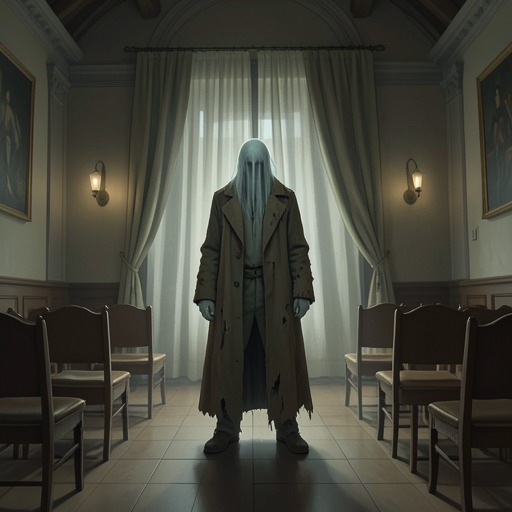
The final nocturnal humiliation comes on September 19 in the entrance hall. Dressed as Jonas the Graveless, with a shroud, lantern, and sexton’s spade, Sir Simon mocks the large Saroni photographs of the Otises that have replaced the Canterville family portraits. On his way toward the library to inspect what remains of the bloodstain, he is startled by two figures who leap from a dark corner and shout at him. He rushes for the staircase, where Washington is waiting with a garden syringe; trapped among his pursuers, Sir Simon escapes through an unlit iron stove and returns to his room by way of the flues and chimneys, dirty, disordered, and despairing.
Withdrawal and Continuing Presence
After that episode Sir Simon is not seen on another nocturnal expedition. The twins continue to wait for him and scatter nutshells in the passages, annoying their parents and the servants, but he does not appear. The household takes his absence as evidence that he has gone: Mr. Otis resumes work on his history of the Democratic Party, Mrs. Otis organizes a clam-bake, the boys turn to games, and Virginia rides with the young Duke of Cheshire. Mr. Otis writes to Lord Canterville that the ghost has departed, and Lord Canterville replies with congratulations.
That conclusion is mistaken. Sir Simon remains in the house, nearly an invalid and wounded in feeling, but not ready to let matters rest. The presence of the Duke of Cheshire renews his wish to demonstrate his old influence: he considers appearing as the Vampire Monk, a role associated with a previous death and a family inheritance lost after a witness suffered apoplexy. Fear of the twins keeps him in his room, however, and the Duke sleeps peacefully. Sir Simon’s withdrawal is therefore a change in the balance of power, not a completed departure; the family’s apparent victory has not resolved what happened to him.
The Hidden History Behind the Farce
The contrast between Sir Simon’s inherited ghostly authority and the Otises’ everyday responses drives the episodes. He treats haunting as an art, a social distinction, and an obligation, selecting costumes and recalling the audiences that once feared him. The Otises instead answer frightening sounds and apparitions as practical problems: chains call for lubricant, apparent illness for medicine, and a ghost for a revolver or a well-placed trap. The repeated mismatch makes Sir Simon’s old repertoire increasingly ineffective, while his dependence on props and elaborate disguises reveals how much his reputation relies on performance.
Yet the story does not reduce his presence to a joke. The Canterville bloodstain persists through removal and changing colors, and the family’s mistaken report of his departure cannot account for the secret still kept within the house. When Virginia later leads the family through a narrow passage to a small vaulted room, they find a skeleton chained to an iron ring, with a trencher and a mould-covered water jug beyond its reach. That discovery confirms the bodily fate hidden behind the ghost’s appearances and reframes his repeated failures: the haunting belongs to a history of murder and confinement, not merely to an old family’s supernatural reputation. Virginia kneels beside the remains to pray, marking the turn from the Otises’ comic contest with Sir Simon toward the compassion and release that his defeat alone could not provide.